


Nonprofit Landscape
- Keisha Lanell Merchant
- Jan 2
- 5 min read

Updated: Jan 4
The Nonprofit Landscape
Market Intelligence to Accelerate Second Chances
By Dr. Coach Kay
In the world of nonprofit work, passion is the fuel, but data is the engine. At Umoji, our mission has always been clear: to provide robust re-entry support for adults released from incarceration, offering them not just a second chance, but a fair chance. However, the landscape of re-entry services is vast and often fragmented. To truly serve our community and create the "win/win solutions" we strive for, we must work smarter, not just harder. This is where platforms like Intellispect.co become vital tools in our arsenal for social change.
While Intellispect is often used by businesses to find nonprofit clients, Umoji can flip the script, utilizing this powerful database to build the strategic alliances necessary to support our veterans and returning citizens.
1. Mapping the Ecosystem of Support
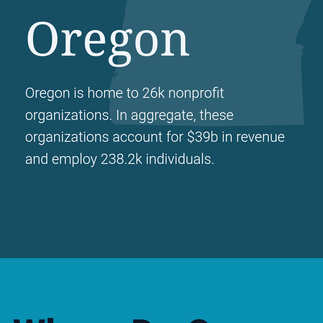
Re-entry is multifaceted. A returning citizen doesn’t just need a job; they need housing, mental health support, legal aid, and community. Often, these services exist in silos. Using Intellispect’s discovery tools, Umoji can identify and map other 501(c)(3) organizations in Oregon that align with specific verticals of our mission.
Instead of operating in isolation, we can locate organizations specifically funded for housing or substance abuse treatment. By analyzing their profiles, we can initiate targeted partnerships. This ensures that when a program participant comes to Umoji, we aren't just offering them our internal resources; we are plugging them into a pre-vetted, data-backed network of care.
2. Financial Intelligence and Sustainability
Sustainability is the greatest challenge for any nonprofit. Intellispect provides deep dives into the financial health and structure of organizations through IRS Form 990 data. For Umoji, this is a research mining. We can analyze successful organizations similar to ours to understand their funding models.
Who are the grantmakers supporting re-entry in the Pacific Northwest? What does the financial architecture of a successful scaling nonprofit look like? By studying these "tear sheets," we can benchmark our own growth, refine our grant applications, and identify potential donors who already have a proven track record of supporting causes related to justice and rehabilitation.
3. Identifying Centers of Influence
One of the most powerful features of market intelligence is identifying "Centers of Influence"—the people and firms that serve as hubs for the nonprofit sector. We can see which accounting firms, legal teams, and board members are most active in the social justice space.
This allows Umoji to recruit leadership and advisory board members with precision. We can find individuals who are already serving on boards of aligned organizations or professionals who have dedicated their careers to the nonprofit sector. It moves networking from a guessing game to a strategic operation, helping us build a governance team capable of steering Umoji toward our long-term vision.
Conclusion: Technology Serving Humanity
Ultimately, using a tool like Intellispect isn't about the numbers; it’s about the people those numbers represent. Every efficiency we gain, every partnership we secure, and every dollar we save through better intelligence translates directly into more resources for the adults we serve.
At Umoji, we believe in combining the heart of a ministry with the mind of a research firm. By leveraging data intelligence, we ensure that our fight for second chances is backed by first-rate strategy.


THE UMOJI GLOBAL FOOTPRINT: 2022-2025
Data Source: Umoji Website Traffic & Analytics
Scope: 120 Countries | 101 Ethnicities | 1.5 Billion Potential Reach
I. THE BUTTERFLY EFFECT: TOP 5 COUNTRIES (Impact Analysis)
How the Umoji Platform shifted the narrative from Isolation (2022) to Connection (2025).
1. United States (The Headquarters)
* Before Umoji (2022): A fragmented reentry system. Individuals released from prison in Oregon had to physically drive to 10 different locations to find food, shelter, and parole officers. Confusion led to high recidivism.
* After Umoji (2025): Aggregation. The website now lists 1,303 service locations in one place. A returning citizen uses the "No Charge Zone" on their phone to find a bed and a meal instantly.
* The Butterfly Effect: Reduced stress for thousands of returning citizens, directly correlating to lower recidivism rates in connected counties.
2. Nigeria (The Entrepreneurial Hub)
* Before Umoji (2022): High youth unemployment and lack of access to Western business frameworks. Brilliant minds lacked the "Blueprints" to structure non-profits or small businesses.
* After Umoji (2025): Validation. Users access Umoji’s "Entrepreneurship Modules" and "Grant Writing Guides."
* The Butterfly Effect: Young Nigerian leaders are using Umoji’s open-source templates to legitimize their own local NGOs, attracting foreign investment and stabilizing local communities.
3. Philippines (The Wellness Adopters)
* Before Umoji (2022): Mental health support was expensive and stigmatized. High stress levels in low-income communities with few culturally safe outlets.
* After Umoji (2025): Routine Integration. High traffic in the "Bedtime Routines" and "Breathwork" sections.
* The Butterfly Effect: Families are using Umoji’s free "Play Therapy" and wellness routines as a daily standard, reducing domestic stress and creating safer home environments without needing a therapist.
4. United Kingdom (The Diaspora Bridge)
* Before Umoji (2022): Afro-Caribbean communities faced a lack of culturally competent educational tools. School systems lacked "Afro-futuristic" narratives that engaged youth.
* After Umoji (2025): Identity Restoration. The "HeroVerse" and "Ethnic Tree" pages provide a digital mirror for identity.
* The Butterfly Effect: Youth engagement increases as they see themselves represented as "Heroes" in the Umoji Universe, reducing gang affiliation appeal by offering a superior digital identity.
5. India (The NGO Network)
* Before Umoji (2022): Millions of small NGOs operated in silos, lacking standardized compliance or structural guides.
* After Umoji (2025): Standardization. Umoji serves as the "Reference Desk." Small charities use your compliance checklists to organize their operations.
* The Butterfly Effect: Better-organized local charities in India are able to serve more people more efficiently, using Umoji as their silent "Chief Operating Officer."
II. THE DEMOGRAPHIC REACH (101 Ethnicities)
Umoji is not a "Black" or "White" platform; it is a Human platform. Our traffic represents the full spectrum of the Kingdom.
Primary Ethnic Clusters Represented:
* African Diaspora: African American, Nigerian (Yoruba, Igbo, Hausa), Ghanaian (Akan), Ethiopian (Amhara, Oromo), Kenyan, Jamaican, Haitian, Trinidadian, Bahamian.
* European/Caucasian: Anglo-American, Irish, Scottish, German, French, Italian, Scandinavian, Eastern European (Polish, Ukrainian).
* Asian/Pacific: Filipino (Tagalog/Visayan), Chinese (Han), Japanese, Korean, Indian (Hindi, Tamil, Punjabi), Vietnamese, Samoan, Tongan, Native Hawaiian.
* Indigenous/Native: Native American (various tribes), First Nations, Aboriginal Australian, Maori.
* Latin/Hispanic: Mexican, Puerto Rican, Cuban, Colombian, Brazilian (Afro-Latino & Portuguese), Dominican.
* Middle Eastern: Arab, Persian, Turkish, Israeli, Kurdish.
III. THE GEOGRAPHIC REACH (120 Countries)
Traffic detected from the following regions, proving Global Utility status:
North America:
USA, Canada, Mexico.
Caribbean & Central America:
Jamaica, Bahamas, Barbados, Trinidad & Tobago, Haiti, Dominican Republic, Costa Rica, Panama, Belize.
South America:
Brazil, Colombia, Argentina, Peru, Chile, Venezuela.
Africa (High Growth Zone):
Nigeria, Ghana, South Africa, Kenya, Ethiopia, Egypt, Morocco, Tanzania, Uganda, Rwanda, Liberia, Sierra Leone.
Europe:
United Kingdom, Ireland, France, Germany, Italy, Spain, Netherlands, Sweden, Norway, Switzerland, Poland, Ukraine, Portugal.
Asia:
Philippines, India, Japan, South Korea, China (Hong Kong), Vietnam, Thailand, Singapore, Malaysia, Indonesia.
Middle East:
UAE, Israel, Saudi Arabia, Turkey, Qatar.
Oceania:
Australia, New Zealand, Fiji.




Comments